|
Wednesday, December 7, 2022
 We are now living in “The Sandwich Generation” era. The Sandwich Generation refers to those caregivers, generally between the ages of 45 and 59, who are caring for aging parents while also caring for young children or dependent young adult children. One of the issues facing many of those caregivers is how to pay for the aging parent’s long-term care needs. Long-term care refers to ongoing assistance to meet some of the basic activities of daily living, such as bathing, eating, dressing, using the toilet, transferring from bed or chair, caring for incontinence or eating. The type and cost of long-term care depends on the services necessary for the health and safety of the person.
Read more . . .
Wednesday, December 4, 2019
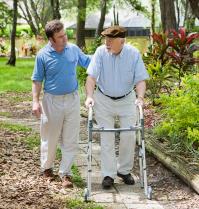 Happy Holidays! Is It Time to Have a Conversation About Long-term Care with an Aging Parent?Like many families, mine is scattered all over the United States. Work and other commitments make it difficult to visit distant loved ones more than a few times a year. When visiting, it is hard to gauge the health and safety of family members because they are often not going about their normal daily activities. A few years ago, while visiting my dad in Oregon, I noticed that there was something not quite right with him. He was repeating himself and telling stories about his history that I was pretty sure were not true.Read more . . .
Monday, November 11, 2019
There are not enough hours in the day – a familiar phrase I mutter to myself while trying to accomplish the items on my ever-expanding to-do list. That phrase may really be true for those caring for a family member with disabilities. Although I haven’t found a way to add hours to my day, I have found ways to extend the time available for learning new things. I’ve discovered that I can listen to podcasts and books while doing tasks that require my physical -but not necessarily my mental – presence. I listen to podcasts when I’m running, doing laundry or cooking, or while I’m wandering around Trader Joe’s picking up groceries. Read more . . .
Thursday, August 6, 2015
 How do we decide how we want to be treated at the end of life? What would a good day look like if you were suffering from a terminal illness? This is one of the questions Dr. Atul Gawande asks in Being Mortal, Medicine and What Matters in the End, New York: Metropolitan Books, Henry Holt and Company, 2014, his book exploring medical treatment at the end of life. Dr. Gawande looks at how this one question, along with a series of questions most physicians are not asking their patients, might shape the course of medical treatment and care of those who are terminally ill, as well as those frail elderly who are in need of long term care. In the book, one patient says that he is willing to have medical treatment for his terminal illness so long as the treatment will allow him to eat ice cream and watch football on television. Read more . . .
Thursday, July 23, 2015
 July is SANDWICH GENERATION AWARENESS MONTH The Sandwich Generation refers to those caregivers, generally between the ages of 45 and 59, who are caring for aging parents while also caring for young children or dependent young adult children. One of the issues facing many of those caregivers is how to pay for the aging parent’s long-term care needs. Long-term care refers to ongoing assistance to meet some of the basic activities of daily living, such as bathing, eating, dressing, using the toilet, transferring from bed or chair, caring for incontinence or eating. The type and cost of long-term care depends on the services necessary for the health and safety of the person. Keep in mind that Medicare does not pay for long-term custodial care.
Read more . . .
Thursday, July 16, 2015
 July is Sandwich Generation Awareness Month. The Sandwich Generation refers to those people, mostly in their mid-40’s to late 50’s, who are caring for aging parents as well as caring for young children or dependent young adult children. If you are the meat or peanut butter in that sandwich, you might be looking for help from your siblings or other family members. One of the best ways to plan the care for an aging or disabled family member is by holding a family meeting. The meeting is designed to do many things: get information from the aging or disabled person about their needs, figure out what kind of care is needed and brainstorm about ways to find that care, gauge the financial resources available for care, and assign duties to various family members so that one caregiver does not get burned out. Read more . . .
Wednesday, November 27, 2013
 The VA provides “Community Living Centers”, or what used to be called Nursing Homes. These are operated by the VA, and are usually in a Veterans Administration Hospital. These Community Living Centers (CLC’s) provide rehabilitation for veterans recovering from injury and illness in the short-term, but also provide long-term skilled nursing care for veterans who need care for long periods of time for a service-connected injury.
For veterans rated at 70% service-connected or higher, or for those who need nursing home care for their service-connected injuries, the VA pays for their nursing home placement as part of their package of healthcare benefits.
The CLC’s are available for non-service connected veterans who are enrolled in VHA healthcare, and need short term services such as rehabilitation, hospice, respite, and for those waiting for placement in the community. Read more . . .
Monday, March 18, 2013
Come join us at the Tapestry House of Alpharetta Tuesday, March 26th at 6:30pm.
Patti will be speaking about the difference between being housebound with a caregiver vs moving into an Assisted Living Facility.
All are welcome!
Tuesday, March 12, 2013
Featured Article by Thom Corrigan, MSW, CMC
Each March we are asked to celebrate Social Work month. For some, this means sending a note or an e-mail to a social worker we may know. For others, it may be treating a social work colleague to lunch or bringing them a plant or some flowers to show our appreciation for them.
But this year, I invite you all to celebrate what social workers do, in addition to who they are. Social workers possess many traits and skills. These include being trained to serve as advocates and brokers for our clients. Social workers have developed skills in the areas of empowerment, resourcefulness, problem solving and helping people with transition. They help people to learn new skills while at the same time, helping them to regain confidence, self-esteem, self-determination and resilience. Social workers do this in part by modeling, teaching, empowering, counseling and developing in a person the traits and characteristics that will lead to better outcomes and create a heightened sense of accomplishment and independence.
Each year, the National Association of Social Workers (NASW) creates a theme as part of its celebration for social work. This year's theme is "Weaving Threads of Resilience and Advocacy: The Power of Social Work." Lastly, did you know that Social Work is the only profession that has the word "WORK" in its name? I find that interesting-
Happy Social Work Month to all my professional peers and colleagues and thanks for all that you do to help people with their everyday needs and challenges!
Thom Corrigan, MSW, CMC
Certified Care Manager
Wednesday, February 20, 2013
 Expressing appreciation for the assistance received from caregivers is something that not many think about, but is certainly needed. Now some may say, “Why should I be grateful for help from someone I am paying?” Or in the case of family caregivers, “Aren’t family members supposed to take care of each other?” Research shows, however, that not only does expressing appreciation make the caregiver feel better about what they do, but also that the people expressing gratitude have a greater sense of well-being.
Expressing appreciation for something your caregiver has done for you does not require the eloquence of a public speaker, only a few words are all that it takes. Examples of some things to say thank you for are : “Your gentleness when helping me change positions really minimizes my pain. Thank you. Read more . . .
Monday, February 11, 2013
Last fall the Social Security Administration quietly released the text of changes to the Program Operations Manual System -- the POMS. Though described as "clarifications" by Social Security, they were actually far-reaching changes that would have driven up the cost of trust administration, complicated the lives of beneficiaries and provided no additional protection for anyone involved.
Lawyers, trustees and advocates raised objections, and thankfully Social Security listened. Last week another set of changes were announced and the news is entirely good for everyone.
First, a word about POMS. Read more . . .
The Elrod-Hill Law Firm,LLC assists clients with Estate Planning, Veterans Benefits, Medicaid, Elder Care Law, Probate, Special Needs Planning and Pet Trusts in the North Atlanta area including the counties of Dekalb, Gwinnett and Fulton.
|

|
|
|